Alisa van de Haar (Leiden University, PI LangPro)
In early modern Europe, language skills were truly foundational. Language education was considered so important for children that, in the Low Countries, the different types of primary and secondary educational institutions were even named after the primary language they taught: the Dutch school, the French school, and the Latin school. Across Europe, university-level education began with the language-oriented classes of the Trivium: grammatica, retorica, and dialectica. All students, whether they wished to become lawyers or physicians, first had to develop their language skills. Language was, and remains, the basis of education.
This insistence on language education comes as no surprise when one considers the broad utility of linguistic competences in early modern societies. Not only were multilingual and rhetorical skills highly valued from a literary and cultural perspective, but they also affected all aspects of society. In diplomacy and trade, of course, being able to haggle or persuade the other party by addressing them in their own language, or to trap them in a carefully woven web of arguments, was key. But the importance of language expertise went far beyond these obvious domains of interlinguistic encounter.
In the absence of standardized languages and centralized systems of governance, communication across multiple languages and dialects was essential to maintaining early modern Europe’s administrative institutions. The imperial, royal, ducal, archiepiscopal, and other courts of the time all depended on a host of translators, interpreters, and scribes. The same was true of the various courts of law.
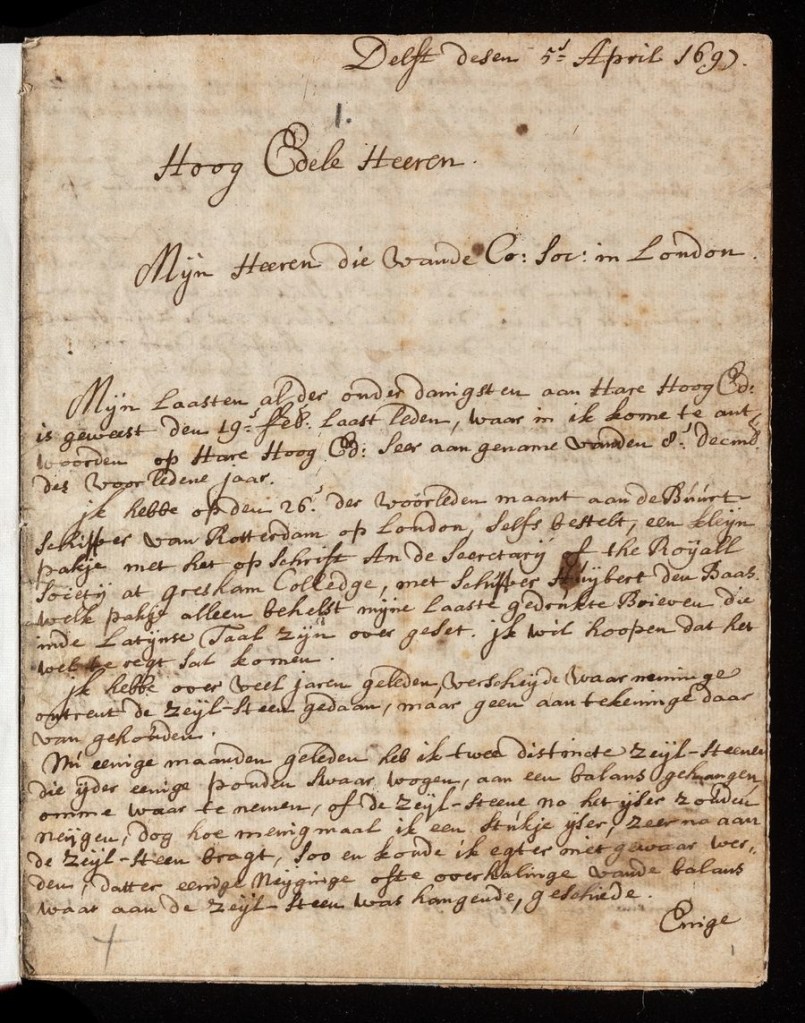
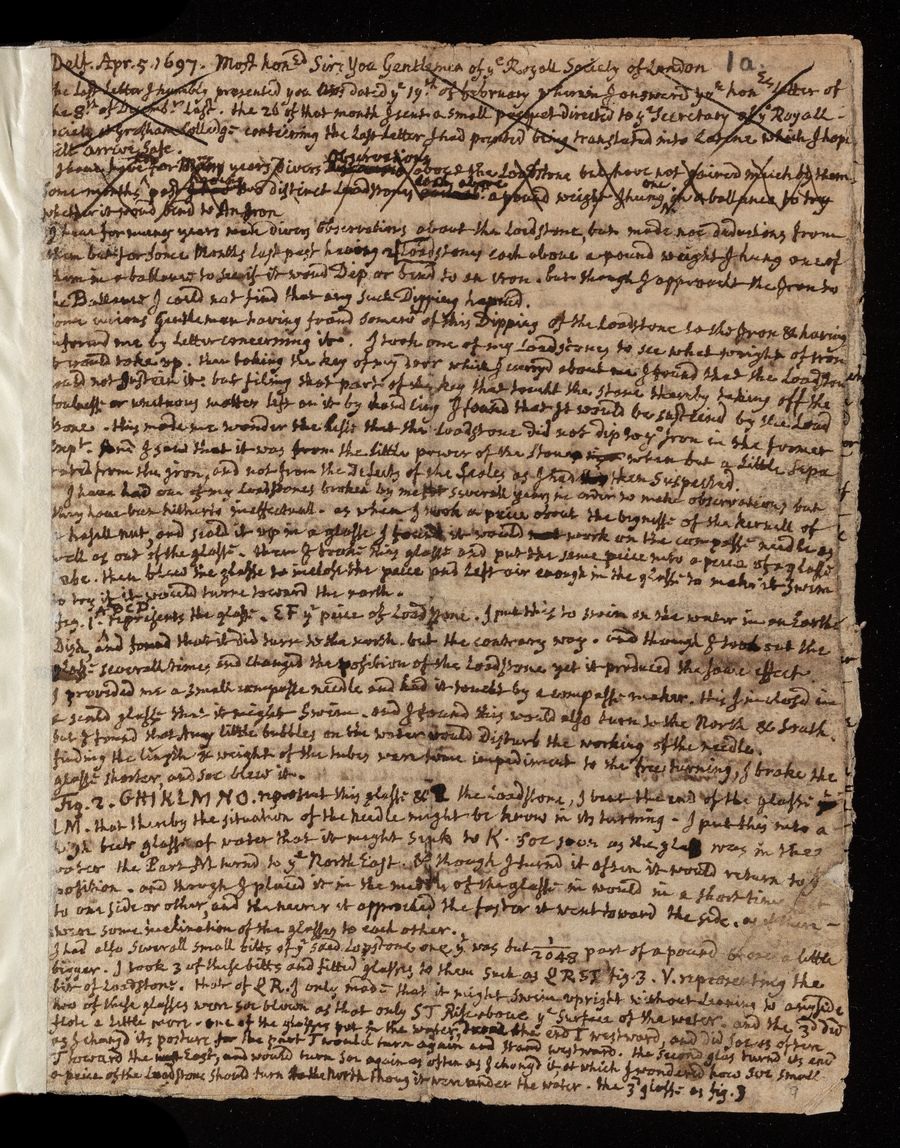
Early modern Europe is known as a period of invention and rapid scientific innovation, yet a closer look shows that virtually none of these advances in science would have been possible without expertise in language. Scientists relied on networks of translators, editors, and printers to disseminate their findings and keep up to date with recent developments. Antoni van Leeuwenhoek, who made important observations in the field of microbiology using his self-made microscopes in the late seventeenth century, was a monolingual speaker of Dutch. He communicated his findings to the Royal Society in London in letters written in Dutch, which were translated into English on site. One such translation features at the top of this blog post. Van Leeuwenhoek himself had to ask the Society to respond in French or Latin, as he had difficulty finding English-Dutch translators to assist him.
In one specific domain, early modern people were more dependent on language expertise than in almost any other: religion. For early modern Christians, an incorrect interpretation of the Word of God could have eternal consequences: their afterlife depended on it, and therefore on the specialists who mastered the various languages in which the sacred texts were transmitted. In the context of the religious debates between Protestants and Catholics, the importance of accurate Latin and vernacular translations of the Bible became a central concern.
Different views on how the faithful should engage with and interpret the Bible, combined with political, social, and economic tensions, led to violent conflicts across early modern Europe in which, once again, language skills played a key role. The Wars of Religion in France, the Eighty Years’ War in the Low Countries, and the Thirty Years’ War in the German lands affected large parts of north-western Europe. Obtaining and translating news reports from far and wide was essential for keeping up to date with developments and adapting strategies, while a veritable media war sought to rally allies to particular causes through rhetorical means. But language skills could also function as weapons in their own right: translators were needed to decipher intercepted enemy communications, cryptographers attempted to crack secret codes, and writing masters produced forged letters designed to mislead enemy troops. Wars were won on the battlefield, but also with the pen.
Language skills were not only crucial to early modern societies, they still are today. It is telling how much impact the arrival of LLMs and AI tools, which are fundamentally language-based technologies, is expected to have on contemporary society. Yet for these technologies to be applicable to an ever wider variety of purposes, even greater expertise in language is needed.
Sources
Akkerman, N., and Langman, P., Spycraft: Tricks and Tools of the Dangerous Trade from Elizabeth I to the Restoration (New Haven: Yale University Press, 2024).
Henderson, F., “Making ‘The good old man’ speak English: The reception of Antoni van Leeuwenhoek’s letters at the Royal Society, 1673-1723”, in: Cook, H. & Dupré, S, eds., Translating Knowledge in the Early Modern Low Countries (Berlin: LIT Verlag, 2013), pp. 243-268.
Featured image
English translation of a Dutch letter written by Antoni van Leeuwenhoek to the Royal Society (see other image). EL/L3/2.


Leave a comment